
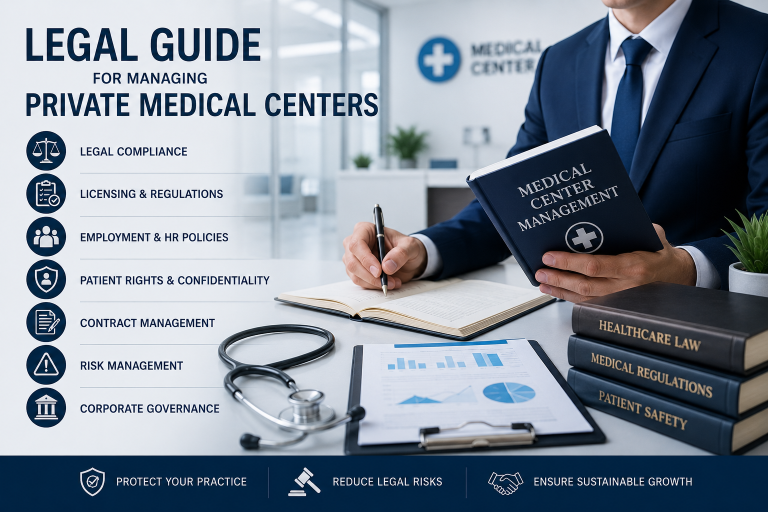
Legal Guide for Managing Private Medical Centers
Managing a private medical center involves much more than delivering quality healthcare services. It requires continuous compliance with healthcare laws, licensing regulations, employment requirements, patient protection standards, and operational policies. A well-managed medical center not only provides excellent patient care but also minimizes legal risks through effective governance and regulatory compliance.
Whether you are establishing a new healthcare facility or expanding an existing practice, understanding the legal framework governing private medical centers is essential for long-term success. Proper legal management protects healthcare providers, strengthens business operations, and enhances patient confidence.
Why Legal Compliance Matters
Legal compliance is one of the most important aspects of operating a private medical center. Healthcare organizations must follow applicable laws and regulations to ensure patient safety, maintain professional standards, and protect their business from legal disputes.
Failure to comply with regulatory requirements may result in financial penalties, suspension of operations, licensing issues, or reputational damage. Maintaining compliance demonstrates professionalism and helps build trust with patients, employees, and regulatory authorities.
Licensing and Regulatory Requirements
Every private medical center must obtain the necessary licenses and approvals before providing healthcare services. Regulatory requirements vary by jurisdiction, but generally include healthcare facility licensing, commercial registration, professional licensing for physicians and healthcare staff, and compliance with health and safety standards.
Medical centers should regularly review their licenses to ensure timely renewal and compliance with updated regulations. Maintaining accurate documentation simplifies inspections and reduces administrative risks.
Corporate Governance and Leadership
Strong governance provides the foundation for sustainable healthcare operations. Medical center management should establish clear organizational structures, define responsibilities, and implement internal policies that promote accountability and transparency.
Effective leadership encourages ethical decision-making, ensures compliance with legal requirements, and supports continuous improvement throughout the organization.
Governance also includes monitoring organizational performance, managing operational risks, and maintaining clear communication among management, healthcare professionals, and administrative staff.
Employment and Human Resources
Healthcare professionals are the most valuable asset of any medical center. Employers should ensure that every employee has the required professional qualifications, valid licenses, and clearly defined employment agreements.
Human resources policies should address recruitment, performance management, workplace conduct, confidentiality, professional development, and employee responsibilities.
Providing regular compliance training helps employees understand legal obligations while reducing the likelihood of workplace disputes or regulatory violations.
Patient Rights and Confidentiality
Protecting patient rights is a fundamental legal responsibility for every healthcare organization. Patients have the right to receive respectful treatment, accurate medical information, informed consent, and confidential handling of their personal health information.
Medical centers should establish written privacy policies, limit access to patient records, and implement secure information management systems. Confidentiality procedures not only protect patients but also strengthen the organization’s legal position.
Medical Records Management
Accurate medical records are essential for delivering quality healthcare and demonstrating compliance with legal requirements. Documentation should be complete, organized, secure, and maintained according to applicable record retention regulations.
Healthcare professionals should ensure that every patient interaction, diagnosis, treatment plan, prescription, and follow-up visit is properly documented.
Well-maintained records improve continuity of care while providing valuable evidence in the event of legal inquiries or professional liability claims.
Contract Management
Private medical centers regularly enter into agreements with physicians, suppliers, laboratories, insurance providers, technology vendors, and maintenance companies.
Before signing any agreement, management should carefully review contract terms relating to financial obligations, service responsibilities, confidentiality, liability allocation, termination rights, and dispute resolution procedures.
Professional legal review helps identify potential risks before contracts become legally binding, reducing the likelihood of future disputes.
Risk Management Strategies
Effective risk management helps medical centers identify legal and operational challenges before they become significant problems.
Organizations should conduct regular compliance audits, update internal policies, monitor regulatory developments, investigate incidents promptly, and provide continuous staff education.
Comprehensive insurance coverage and clearly documented procedures further strengthen organizational resilience and support business continuity.
Regulatory Inspections
Healthcare authorities may perform routine inspections to evaluate compliance with healthcare regulations and professional standards.
Medical centers should prepare by maintaining updated licenses, organized documentation, staff qualification records, infection control procedures, equipment maintenance logs, and patient safety protocols.
Preparation for inspections demonstrates professionalism and minimizes operational disruption.
The Value of Legal Support
Healthcare legal consultants play an important role in helping private medical centers navigate complex legal and regulatory requirements.
Their services often include regulatory compliance guidance, licensing assistance, policy development, contract review, employment law advice, governance support, dispute prevention, and legal risk assessments.
Early legal guidance enables healthcare organizations to make informed business decisions while protecting both patients and organizational interests.
Best Practices for Long-Term Success
Maintaining legal compliance requires continuous attention rather than one-time implementation.
Medical centers should regularly review internal policies, monitor legislative changes, conduct compliance training, evaluate operational risks, maintain accurate documentation, and seek legal advice before making significant business decisions.
Organizations that prioritize compliance create safer working environments, strengthen patient confidence, and position themselves for sustainable growth.
Conclusion
Managing a private medical center successfully requires balancing excellent patient care with strong legal and regulatory compliance. By implementing effective governance, maintaining accurate records, protecting patient rights, reviewing contracts carefully, and seeking professional legal guidance, healthcare organizations can reduce legal risks while improving operational performance.
A proactive legal approach not only safeguards the organization but also contributes to higher standards of healthcare delivery and long-term business success.
Frequently Asked Questions
Why is legal compliance important for private medical centers?
Legal compliance helps protect patients, ensures regulatory approval, reduces legal risks, and supports sustainable healthcare operations.
What licenses are required for a private medical center?
Requirements vary by jurisdiction but generally include healthcare facility licensing, commercial registration, and professional licenses for healthcare practitioners.
Why should medical centers review contracts before signing?
Legal review helps identify unfavorable terms, financial risks, liability issues, and compliance concerns before agreements become legally binding.
How can medical centers reduce legal risks?
Organizations can reduce legal risks by maintaining compliance programs, conducting regular audits, protecting patient information, training employees, and seeking professional legal advice.
What role does a healthcare legal consultant play?
Healthcare legal consultants assist with licensing, regulatory compliance, contract management, governance, employment matters, and legal risk management.