
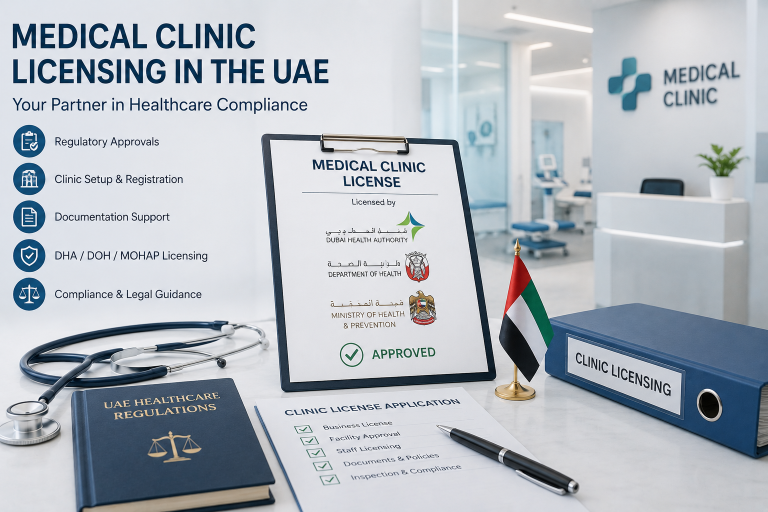
Medical Clinic Licensing in the UAE: A Complete Guide for Healthcare Providers
The United Arab Emirates has established itself as a leading healthcare destination in the Middle East, attracting healthcare professionals, investors, and medical entrepreneurs from around the world. However, opening a medical clinic in the UAE requires compliance with strict regulatory requirements and licensing procedures.
Obtaining a medical clinic license is a critical step in ensuring legal operations and maintaining compliance with healthcare regulations. Understanding the licensing process can help healthcare providers avoid delays, reduce risks, and successfully launch their medical facilities.
Why Medical Clinic Licensing Is Important in the UAE
Healthcare facilities in the UAE are regulated by government authorities to ensure patient safety, quality healthcare services, and professional standards.
Operating a clinic without the required approvals can result in penalties, business interruptions, or license suspension. Proper licensing demonstrates compliance with healthcare regulations and builds trust among patients and stakeholders.
Benefits of Proper Medical Licensing
Licensed medical clinics benefit from:
- Legal authorization to operate
- Increased patient confidence
- Regulatory compliance
- Reduced legal risks
- Enhanced business credibility
- Access to insurance and healthcare networks
Regulatory Authorities for Medical Clinic Licensing
Dubai Health Authority (DHA)
Healthcare facilities operating in Dubai must obtain approvals and licenses from the Dubai Health Authority (DHA).
Department of Health Abu Dhabi (DoH)
Clinics located in Abu Dhabi are regulated by the Department of Health (DoH), which oversees licensing and healthcare compliance.
Ministry of Health and Prevention (MOHAP)
Healthcare facilities located in the Northern Emirates are generally regulated by the Ministry of Health and Prevention (MOHAP).
Requirements for Obtaining a Medical Clinic License
Business Registration
Applicants must establish a legal business entity and obtain the necessary commercial licenses before proceeding with healthcare licensing requirements.
Facility Approval
The clinic premises must comply with healthcare facility standards, including:
- Location requirements
- Space specifications
- Safety measures
- Infection control procedures
- Accessibility standards
Healthcare Professional Licensing
Doctors, nurses, and healthcare professionals working within the clinic must obtain professional licenses from the relevant healthcare authority.
Compliance Documentation
Applicants may be required to submit documentation such as:
- Business registration certificates
- Facility layout plans
- Lease agreements
- Staff qualifications
- Operational policies and procedures
The Medical Clinic Licensing Process
Step 1: Determine the Clinic Type
Healthcare investors must identify the type of medical services the clinic will provide, such as general practice, dentistry, dermatology, physiotherapy, or specialized healthcare services.
Step 2: Secure Initial Approval
Regulatory authorities review the proposed healthcare facility and assess whether it meets initial licensing requirements.
Step 3: Facility Inspection
Authorities may conduct inspections to verify compliance with healthcare standards and regulatory requirements.
Step 4: Submit Licensing Application
The clinic owner submits all required documents, approvals, and compliance records for final review.
Step 5: Receive Operational License
Once all requirements have been satisfied, the authority issues the medical clinic license, allowing the facility to begin operations.
Common Challenges in Medical Clinic Licensing
Regulatory Complexity
Healthcare regulations can be detailed and subject to updates, making professional guidance valuable throughout the licensing process.
Documentation Requirements
Incomplete documentation is one of the most common causes of licensing delays.
Compliance Issues
Failure to meet facility standards or staffing requirements can affect licensing approval timelines.
How Legal Consultants Assist with Medical Clinic Licensing
Healthcare legal consultants help investors and healthcare providers navigate licensing requirements efficiently.
Services often include:
- Regulatory compliance guidance
- Licensing application support
- Documentation review
- Contract preparation
- Facility compliance assessments
- Communication with regulatory authorities
Professional legal support can significantly reduce licensing delays and ensure a smoother approval process.
Conclusion
Obtaining a medical clinic license in the UAE requires careful planning, regulatory compliance, and adherence to healthcare standards. Whether establishing a new healthcare facility or expanding existing operations, understanding the licensing process is essential for long-term success.
Working with experienced healthcare legal consultants can help healthcare providers navigate regulatory requirements, avoid common mistakes, and achieve timely licensing approvals.
Frequently Asked Questions (FAQs)
How long does it take to obtain a medical clinic license in the UAE?
Which authority issues medical clinic licenses in Dubai?
Can foreign investors own a medical clinic in the UAE?
Yes, subject to applicable business ownership regulations and healthcare licensing requirements.