
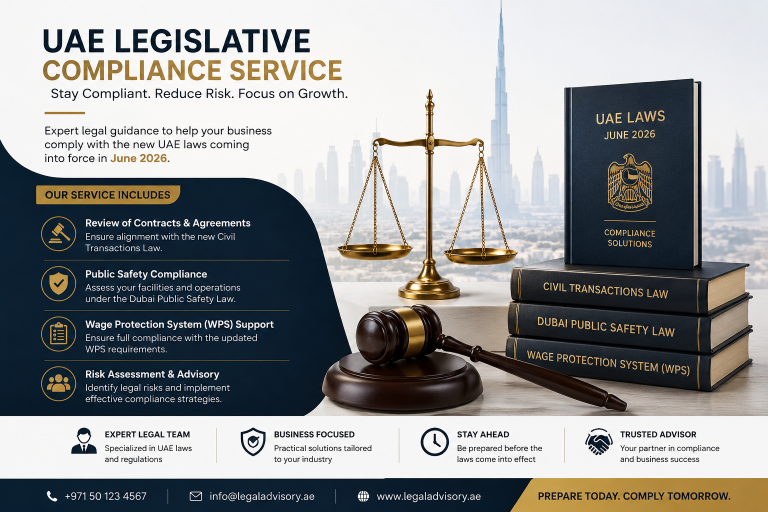
UAE Legislative Changes Taking Effect in June 2026: Civil Transactions Law, Dubai Public Safety Law, and Wage Protection System Updates
June 2026 marks a significant milestone in the legal landscape of the United Arab Emirates (UAE). A series of important legislative reforms will come into force on 1 June 2026, reflecting the country’s ongoing commitment to strengthening its legal framework, enhancing public safety, and improving labor protections. These changes include the new UAE Civil Transactions Law, Dubai’s Public Safety Law, and updated regulations governing the Wage Protection System (WPS).
For businesses, legal professionals, employers, investors, and property stakeholders, understanding these legislative developments is essential to ensure compliance and reduce potential legal risks. This article explores the key changes and their practical implications across multiple sectors.
Why June 2026 Is Important for UAE Legislation
Unlike regulatory deadlines or compliance milestones, the laws discussed in this article officially enter into force in June 2026. Their implementation represents a substantial shift in legal obligations and operational requirements across the UAE.
The three major legislative developments are:
- UAE Federal Decree-Law No. 25 of 2025 on Civil Transactions
- Dubai Law No. 2 of 2026 on Public Safety
- Ministerial Resolution No. 340 of 2026 regarding the Wage Protection System (WPS)
Together, these laws reinforce legal certainty, public welfare, and labor rights while supporting the UAE’s broader economic and governance objectives.
UAE Civil Transactions Law 2026 – A New Framework for Civil and Commercial Relations
What Is the New Civil Transactions Law?
The UAE Civil Transactions Law is one of the most significant federal laws entering into force in June 2026. As the primary legal framework governing civil relationships, contracts, obligations, property rights, and liability, the law affects individuals and businesses alike.
The legislation serves as the foundation for:
- Contract formation and interpretation
- Performance of obligations
- Compensation and damages
- Civil liability
- Property rights
- Limitation periods
- Legal remedies
Impact on Businesses and Contracts
The new law has particular importance for organizations operating under long-term contractual arrangements, including:
- Construction contracts
- Commercial leases
- Investment agreements
- Supply contracts
- Facility management agreements
- Financing arrangements
Businesses should carefully review existing agreements to determine how the new legal framework may affect ongoing obligations and future disputes.
Compliance Recommendations
Organizations are advised to review:
- Force majeure clauses
- Liability provisions
- Termination rights
- Notice requirements
- Indemnity clauses
- Dispute resolution mechanisms
Legal departments and law firms should also assess contract templates and internal policies to align with the updated legal framework.
Dubai Public Safety Law 2026 – Strengthening Prevention and Risk Management
Overview of the Public Safety Law
Dubai Law No. 2 of 2026 introduces a comprehensive public safety framework aimed at protecting lives, property, and public facilities throughout the Emirate.
The law applies to:
- Public venues
- Entertainment facilities
- Event locations
- Commercial buildings
- Residential properties
- Free zones and special development areas
Key Objectives of the Law
The legislation seeks to:
- Enhance public safety standards
- Reduce accidents and prevent risks
- Improve oversight and enforcement
- Protect consumers and visitors
- Support Dubai’s tourism and entertainment sectors
Unlike traditional safety regulations, the law adopts a proactive and preventative approach rather than relying solely on post-incident enforcement.
Practical Impact on Property Owners and Operators
The law may affect:
- Building owners
- Shopping mall operators
- Event organizers
- Facility management companies
- Entertainment venue operators
- Service providers
Organizations should review:
- Emergency evacuation plans
- Safety inspection certificates
- Fire protection systems
- Warning signage
- Occupancy limits
- Maintenance procedures
- Accessibility measures
Failure to comply may result in administrative penalties and could potentially influence civil liability claims following accidents or safety incidents.
UAE Wage Protection System Updates 2026
What Is Changing?
Ministerial Resolution No. 340 of 2026 introduces updates to the UAE Wage Protection System (WPS), which plays a crucial role in ensuring employees receive wages accurately and on time.
The WPS remains one of the UAE’s most important labor compliance mechanisms and supports transparency in employer-employee relationships.
Why the Changes Matter
The updated regulations reinforce the principle that wage payment is not merely a contractual obligation but also a regulated compliance requirement.
Non-compliance may impact:
- Company labor records
- Government transactions
- Regulatory standing
- Employee relations
- Potential labor disputes
Industries Most Affected
The changes are especially relevant for:
- Construction companies
- Security service providers
- Hospitality businesses
- Retail operators
- Logistics companies
- Maintenance and facility management firms
Employers should review payroll systems, cash flow planning, and banking arrangements to ensure full compliance.
Key Compliance Actions for Businesses Before June 2026
To prepare for the legislative changes, organizations should:
- Review existing contracts under the new Civil Transactions Law.
- Update safety policies and risk management procedures.
- Conduct public safety audits for buildings and facilities.
- Review payroll processes and WPS compliance.
- Train legal, HR, and operational teams on the new requirements.
- Seek legal advice where necessary to manage transitional issues.
Early preparation can help businesses avoid compliance risks and ensure a smooth transition when the laws take effect.
Conclusion
As the UAE enters a new phase of legislative development in June 2026, businesses and stakeholders should take proactive steps to understand and comply with the new legal requirements. Early preparation, legal review, and operational readiness will be essential to minimize risks, maintain compliance, and successfully adapt to the evolving regulatory environment.
Frequently Asked Questions (FAQs)
When do the new UAE legislative changes take effect?
The UAE Civil Transactions Law, Dubai Public Safety Law, and updated Wage Protection System regulations all come into force on 1 June 2026.
Who is affected by the new Civil Transactions Law?
The law affects individuals, companies, investors, landlords, tenants, contractors, and anyone involved in contractual or civil legal relationships.
Does the Dubai Public Safety Law apply to private businesses?
Yes. The law applies to many private-sector entities, including building operators, event organizers, entertainment venues, and commercial facilities.
Why is the Wage Protection System important?
The WPS helps ensure employees receive wages on time and enables authorities to monitor compliance with labor regulations.
What should businesses do before June 2026?
Businesses should review contracts, safety procedures, payroll systems, and internal compliance programs to align with the new legal requirements.