
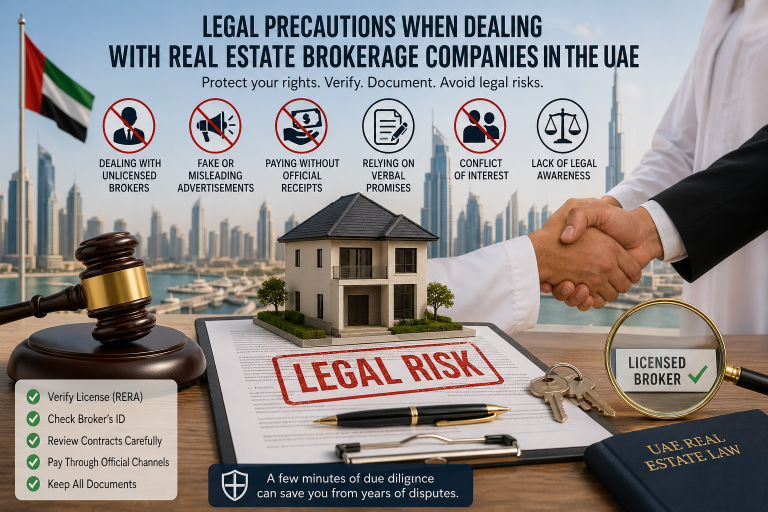
Legal Precautions When Dealing with Real Estate Brokerage Companies in the UAE
The real estate market in the United Arab Emirates is one of the most active and attractive investment sectors in the region. Real estate brokerage companies play a major role in connecting buyers, sellers, landlords, tenants, and property developers. However, dealing with a real estate broker without proper legal awareness can expose buyers and investors to financial losses, fraud, or complicated legal disputes.
With the rapid growth of online property advertising and social media marketing, many buyers are exposed to misleading advertisements, unlicensed brokers, and undocumented transactions. For this reason, understanding the legal precautions before working with any real estate brokerage company in the UAE is essential.
1. Verify the Broker’s License
One of the most important legal precautions is ensuring that the real estate broker or brokerage company is officially licensed.
In Dubai, brokers must be registered with the Real Estate Regulatory Agency, commonly known as RERA. Clients should always verify the broker’s registration before signing agreements or making payments.
Working with an unlicensed broker increases the risk of fraud and may make it difficult to recover funds in case of disputes.
2. Beware of Fake Property Advertisements
Misleading property advertisements are common in competitive real estate markets. Some brokers advertise unavailable properties, unrealistic prices, or inaccurate property details to attract buyers.
In Dubai, real estate advertisements require official approval from the Dubai Land Department. Buyers should avoid dealing with advertisements that lack clear information or pressure them into making quick decisions.
Always request official property details and verify the advertisement source before proceeding.
3. Never Pay Without Official Documentation
A common mistake in property transactions is paying deposits or reservation fees without obtaining official receipts or agreements.
Every payment should include:
- A written receipt
- Property details
- Payment amount
- Refund terms
- Official company information
Avoid transferring money to personal bank accounts unless there is a legally valid reason supported by documentation.
Proper documentation protects both buyers and investors in case legal disputes arise later.
4. Confirm the Broker’s Authority
Not every broker has the authority to negotiate prices, collect deposits, or sign agreements on behalf of property owners or developers.
Before relying on promises related to pricing, payment plans, or delivery dates, buyers should request proof of authorization from the broker.
This step is especially important in off-plan property transactions and high-value investments.
5. Do Not Rely on Verbal Promises
Many property disputes happen because buyers rely on verbal promises that are not included in written contracts.
Promises regarding guaranteed returns, rental income, delivery dates, or fee exemptions should always be documented in writing.
If a condition is important, it must appear clearly in the contract or official agreement.
6. Understand the Broker’s Commission
The broker’s commission should always be agreed upon before completing the transaction.
The agreement should clearly state:
- The commission percentage or amount
- Who is responsible for payment
- When the commission becomes payable
Written agreements help prevent misunderstandings and future disputes between parties.
7. Be Careful with Off-Plan Properties
Buying off-plan properties can offer attractive investment opportunities, but it also carries higher risks.
Before purchasing an off-plan property, buyers should verify:
- The developer’s license
- Project registration status
- Escrow account arrangements
- Construction timelines
- Refund and cancellation policies
Delays or project cancellations can create serious financial complications if buyers fail to verify these details in advance.
8. Read All Agreements Carefully
Reservation forms and brokerage agreements may contain important legal clauses regarding refunds, commissions, penalties, and deadlines.
Buyers should never sign documents without reading and understanding all terms carefully.
Seeking legal advice before signing major agreements can help avoid costly mistakes.
9. Verify Property Information
Before making any payment, buyers should confirm important property details such as:
- Ownership documents
- Property size
- Unit number
- Existing mortgages
- Service charges
- Legal restrictions
Property verification reduces the risk of hidden legal or financial problems.
Additionally, buyers and investors should maintain copies of all emails, receipts, contracts, and advertisements related to the transaction. Keeping organized records can provide strong legal protection in case disputes arise and may help authorities investigate fraudulent real estate activities or misleading brokerage practices in the UAE property market.
Conclusion
Real estate transactions in the UAE can be safe and profitable when conducted through licensed brokers and supported by proper legal documentation. However, relying on misleading advertisements, undocumented payments, or verbal promises can expose buyers to significant legal and financial risks.
The safest approach is to verify licenses, review all documents carefully, and ensure every agreement is properly documented before making payments or signing contracts.
Frequently Asked Questions (FAQs)
1. How can I verify if a real estate broker is licensed in Dubai?
You can verify brokers through the official platforms of the Dubai Land Department and Real Estate Regulatory Agency.
2. Is it safe to transfer money to a broker’s personal account?
In most cases, no. Payments should be made through official company accounts with proper receipts and documentation.
3. Why is written documentation important in real estate transactions?
Written documents provide legal proof of payments, agreements, and obligations between parties.
4. What are the risks of buying off-plan property in the UAE?
Risks may include construction delays, project cancellation, or disputes regarding refunds and payment schedules.