
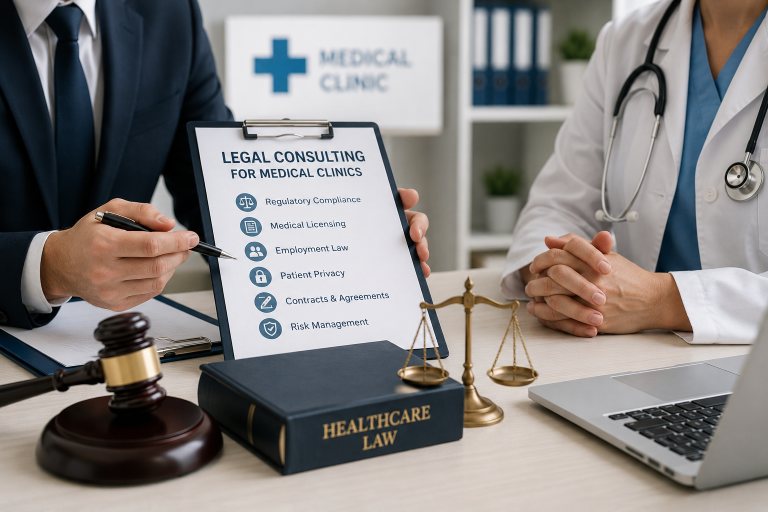
Legal Consulting Services for Medical Clinics: Ensuring Compliance and Protecting Healthcare Businesses
Medical clinics operate in a highly regulated environment where legal compliance is essential for maintaining patient trust and avoiding costly disputes. From licensing requirements and employment matters to patient confidentiality and medical malpractice concerns, healthcare providers face numerous legal challenges. Professional legal consulting services for medical clinics help healthcare businesses navigate these complexities while ensuring full compliance with applicable laws and regulations.
Whether you manage a private clinic, specialty medical center, or multi-location healthcare facility, legal guidance can protect your organization from risks and support sustainable growth.
Why Medical Clinics Need Legal Consulting Services
Healthcare organizations must comply with a wide range of legal and regulatory requirements. Failure to meet these obligations can result in fines, litigation, reputational damage, or even suspension of operations.
Legal consultants assist clinics in identifying potential risks, implementing compliance measures, and ensuring that policies align with healthcare regulations.
Key areas where legal consulting provides value include:
- Healthcare regulatory compliance
- Medical licensing and accreditation
- Employment and labor law matters
- Patient data protection and privacy
- Medical malpractice risk management
- Contract drafting and review
- Corporate governance and business structuring
Healthcare Regulatory Compliance
Understanding Healthcare Laws
Medical clinics must comply with healthcare regulations established by local authorities and licensing bodies. These laws govern patient care standards, record keeping, facility management, and professional conduct.
Legal consultants help clinics understand their obligations and develop compliance frameworks that reduce regulatory risks.
Compliance Audits and Risk Assessments
Regular legal audits allow healthcare providers to identify compliance gaps before they become serious problems. Legal experts review clinic operations, policies, and documentation to ensure adherence to applicable laws and industry standards.
Employment Law Support for Medical Clinics
Managing Healthcare Workforce Compliance
Medical clinics employ doctors, nurses, technicians, administrative staff, and support personnel. Employment relationships must comply with labor laws, workplace safety regulations, and contractual requirements.
Legal consultants assist with:
- Employment contracts
- Staff policies and procedures
- Disciplinary actions
- Workplace disputes
- Employee termination processes
- Labor law compliance
Preventing Employment Disputes
Proper legal documentation and HR policies help clinics minimize conflicts and maintain a productive work environment.
Patient Privacy and Data Protection
Protecting Sensitive Medical Information
Patient records contain highly sensitive personal information that must be protected from unauthorized access or disclosure.
Legal consultants help medical clinics establish privacy policies, data protection procedures, and cybersecurity compliance measures to safeguard patient information.
Developing Data Management Policies
Effective legal guidance ensures that clinics properly collect, store, share, and dispose of patient data in accordance with applicable privacy regulations.
Medical Contracts and Commercial Agreements
Drafting and Reviewing Contracts
Medical clinics regularly enter into agreements with suppliers, healthcare professionals, insurance providers, landlords, and service vendors.
Legal consultants review and draft contracts to ensure:
- Clear contractual obligations
- Risk allocation provisions
- Regulatory compliance
- Dispute resolution mechanisms
- Protection of business interests
Partnership and Shareholder Agreements
For clinics with multiple owners or investors, legal experts prepare agreements that define ownership rights, responsibilities, and decision-making procedures.
Medical Malpractice Risk Management
Reducing Legal Exposure
Medical malpractice claims can have significant financial and reputational consequences. Legal consultants help clinics implement policies that reduce liability risks and improve documentation practices.
Responding to Legal Claims
When disputes arise, legal advisors assist healthcare providers in responding to complaints, investigations, and litigation while protecting the clinic’s interests.
Benefits of Professional Legal Consulting for Medical Clinics
Medical clinics that invest in legal consulting services benefit from:
- Improved regulatory compliance
- Reduced legal risks
- Stronger patient trust
- Better contract protection
- Enhanced operational efficiency
- Lower likelihood of disputes and penalties
- Long-term business sustainability
By working with experienced legal professionals, healthcare providers can focus on delivering quality patient care while maintaining full legal compliance.
Conclusion
Legal consulting services play a critical role in helping medical clinics navigate complex healthcare regulations and business challenges. From compliance management and employment law support to contract review and malpractice risk mitigation, professional legal guidance provides the protection healthcare organizations need to operate confidently and successfully.
Partnering with experienced legal consultants allows medical clinics to minimize risks, strengthen governance, and focus on what matters most—providing exceptional patient care.