
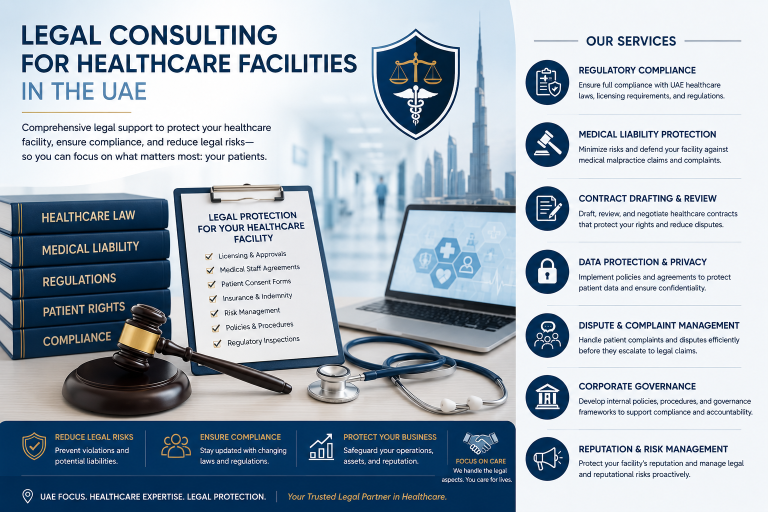
The Role of a Legal Consultant in Protecting Healthcare Facilities in the UAE
Healthcare facilities in the United Arab Emirates operate within a highly regulated environment governed by healthcare laws, licensing regulations, medical liability requirements, patient rights, data protection rules, and insurance obligations. Whether managing a hospital, medical center, clinic, or healthcare startup, legal compliance is essential for operational success and long-term sustainability.
A specialized legal consultant plays a critical role in helping healthcare facilities comply with UAE healthcare regulations, minimize legal risks, and maintain high standards of governance and patient protection.
Why Healthcare Facilities Need Legal Consultants
Legal consultants are no longer involved only after disputes arise. Today, they are an essential part of healthcare risk management, regulatory compliance, and corporate governance. Their role is preventive, helping healthcare providers avoid costly violations, penalties, and legal disputes before they occur.
Protecting Healthcare Facilities from Medical Liability Risks
Medical liability remains one of the most significant legal challenges facing healthcare providers. Claims may arise from medical negligence, documentation errors, inadequate informed consent, or non-compliance with professional standards.
Key Legal Support Areas
A healthcare legal consultant helps by:
- Reviewing patient consent forms.
- Ensuring proper medical documentation procedures.
- Assessing complaint-handling policies.
- Reviewing incident reporting systems.
- Advising on risk management strategies.
Proper legal oversight strengthens a healthcare facility’s ability to defend itself in the event of complaints, investigations, or compensation claims.
Ensuring Compliance with UAE Healthcare Regulations
Healthcare facilities must comply with licensing requirements issued by UAE health authorities, including regulations relating to healthcare professionals, facility operations, and approved medical services.
Compliance Services Include:
- Reviewing facility licensing status.
- Monitoring license renewals.
- Verifying healthcare professionals’ credentials.
- Ensuring services remain within approved licensing scopes.
- Implementing regulatory updates and healthcare circulars.
Failure to comply can result in fines, operational restrictions, reputational damage, or suspension of healthcare activities.
Drafting and Reviewing Healthcare Contracts
Healthcare organizations rely on various contracts, including physician agreements, insurance contracts, medical equipment supply agreements, laboratory services agreements, and healthcare management contracts.
A legal consultant ensures contracts clearly define:
Important Contract Provisions
- Scope of services.
- Confidentiality obligations.
- Liability limitations.
- Insurance requirements.
- Data protection responsibilities.
- Termination rights.
- Dispute resolution mechanisms.
Well-drafted contracts reduce legal exposure and protect healthcare facilities from financial and regulatory disputes.
Protecting Patient Data and Medical Confidentiality
Patient health information is among the most sensitive forms of personal data. Healthcare facilities must implement strong safeguards to protect medical records and confidential information.
Legal Consultant Responsibilities
A legal consultant assists with:
- Data protection policies.
- Patient privacy procedures.
- Telemedicine compliance.
- Medical records management.
- Data-sharing agreements.
- Vendor and IT service contracts.
These measures help healthcare facilities comply with UAE data protection laws while maintaining patient trust.
Managing Medical Complaints and Disputes
Many healthcare disputes begin as routine patient complaints. Without proper handling, these complaints may escalate into regulatory investigations, compensation claims, or medical liability cases.
A legal consultant helps by:
- Evaluating legal risks.
- Reviewing medical records.
- Coordinating with healthcare management.
- Preparing official responses.
- Managing communications with authorities.
Early legal intervention often reduces the risk of escalation and strengthens the facility’s legal position.
Supporting Healthcare Governance and Internal Policies
Strong governance is essential for every healthcare facility. Legal consultants contribute by developing policies that support accountability, compliance, and operational efficiency.
Governance Support Includes
- Professional conduct policies.
- Internal investigation procedures.
- Conflict-of-interest policies.
- Medical incident reporting systems.
- Compliance frameworks.
- Risk management procedures.
Effective governance protects patients, healthcare professionals, and facility owners alike.
Protecting the Reputation of Healthcare Facilities
In the healthcare sector, reputation directly affects patient trust, insurance partnerships, and business growth.
Legal consultants assist healthcare facilities by:
- Reviewing medical advertising content.
- Ensuring compliance with marketing regulations.
- Managing responses to complaints.
- Advising on public communications.
- Reducing reputational risks associated with investigations or disputes.
Maintaining legal compliance in public communications helps safeguard both credibility and regulatory standing.
When Should a Healthcare Facility Hire a Legal Consultant?
Healthcare facilities should seek legal guidance during:
- Healthcare facility licensing.
- Expansion into new medical specialties.
- Physician recruitment and contracting.
- Medical complaint investigations.
- Telemedicine platform launches.
- Insurance company negotiations.
- Regulatory inspections.
- Data protection policy development.
- Healthcare marketing campaigns.
Early legal involvement helps prevent issues before they become costly legal disputes.
Conclusion
A legal consultant is a strategic partner for healthcare facilities in the UAE. From medical liability prevention and regulatory compliance to contract management and patient data protection, legal expertise helps healthcare providers operate confidently within the UAE’s healthcare regulatory framework. Investing in proactive legal support reduces risks, strengthens governance, and contributes to the long-term success of healthcare organizations.