
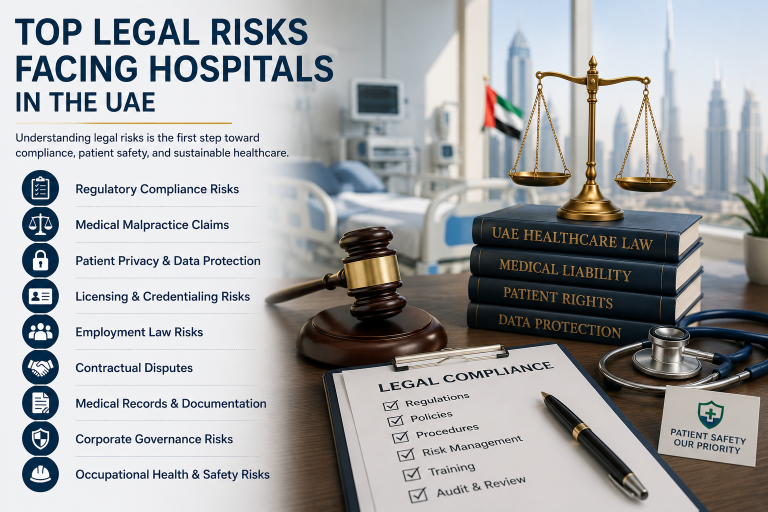
Top Legal Risks Facing Hospitals in the UAE
Hospitals in the United Arab Emirates operate within one of the region’s most advanced and highly regulated healthcare systems. While delivering high-quality patient care is their primary mission, healthcare providers must also comply with a broad range of legal and regulatory requirements governing licensing, patient safety, employment, data protection, medical records, and corporate governance.
Failure to meet these obligations can expose hospitals to significant legal disputes, financial penalties, regulatory investigations, and reputational damage. Understanding the most common legal risks allows healthcare organizations to implement proactive compliance strategies that protect patients, healthcare professionals, and business operations.
This guide explores the key legal risks facing hospitals in the UAE and outlines practical measures to reduce legal exposure while maintaining compliance with healthcare regulations.
Why Legal Risk Management Is Essential
Legal risk management is an essential component of hospital governance. Healthcare organizations face complex legal obligations that extend beyond patient treatment to include operational, financial, employment, and contractual responsibilities.
An effective compliance program helps hospitals:
- Reduce regulatory violations
- Protect patient rights
- Improve operational efficiency
- Prevent legal disputes
- Strengthen corporate governance
- Maintain public trust
Hospitals that proactively identify legal risks are better positioned to deliver safe, compliant, and sustainable healthcare services.
Regulatory Compliance Risks
Healthcare facilities in the UAE must comply with regulations issued by the relevant health authorities, including licensing requirements, professional standards, quality assurance measures, and operational guidelines.
Failure to comply with applicable regulations may result in:
- Administrative penalties
- Suspension of healthcare services
- License restrictions
- Regulatory investigations
- Financial sanctions
Regular compliance audits and internal policy reviews help organizations remain aligned with evolving legal requirements.
Medical Malpractice Claims
Medical malpractice remains one of the most significant legal risks facing hospitals.
Claims may arise from:
- Misdiagnosis
- Delayed diagnosis
- Surgical errors
- Medication mistakes
- Failure to obtain informed consent
- Inadequate patient monitoring
Hospitals can reduce malpractice risks by implementing clinical governance programs, maintaining high professional standards, and ensuring complete medical documentation.
Patient Privacy and Data Protection
Hospitals manage large volumes of confidential patient information. Protecting this data is both an ethical obligation and a legal requirement.
Healthcare organizations should implement:
- Secure electronic medical record systems
- Access control procedures
- Data encryption
- Employee confidentiality policies
- Cybersecurity measures
- Regular privacy training
Strong data protection practices reduce the likelihood of regulatory violations and strengthen patient confidence.
Licensing and Credentialing Risks
Hospitals are responsible for ensuring that all healthcare professionals maintain valid professional licenses and appropriate qualifications.
Failure to verify credentials or monitor license renewals may expose organizations to legal liability and regulatory action.
Credential verification should become part of routine compliance procedures.
Employment Law Risks
Hospitals employ physicians, nurses, pharmacists, technicians, and administrative personnel under various contractual arrangements.
Common employment-related legal risks include:
- Improper employment contracts
- Workplace disputes
- Discrimination claims
- Unlawful termination
- Wage and benefit disputes
- Occupational health and safety issues
Clear human resources policies and legally compliant employment practices help minimize workplace conflicts.
Contractual Disputes
Hospitals frequently enter into agreements with suppliers, insurance companies, laboratories, technology providers, pharmaceutical companies, and outsourced service providers.
Poorly drafted contracts may result in:
- Financial disputes
- Service interruptions
- Liability conflicts
- Contract termination disagreements
- Compliance issues
Professional legal review before signing agreements significantly reduces contractual risks.
Medical Records and Documentation
Incomplete or inaccurate medical records can weaken a hospital’s legal position during investigations or malpractice claims.
Healthcare providers should ensure that patient documentation is:
- Accurate
- Complete
- Timely
- Secure
- Properly retained
High-quality documentation supports continuity of care while providing important legal protection.
Corporate Governance Risks
Hospitals require effective governance structures that clearly define responsibilities, reporting relationships, compliance oversight, and internal controls.
Weak governance may lead to:
- Poor decision-making
- Compliance failures
- Financial mismanagement
- Increased legal exposure
Strong governance promotes accountability and supports sustainable organizational growth.
Occupational Health and Safety
Hospitals must provide a safe environment for patients, employees, and visitors.
Legal risks may arise from:
- Infection control failures
- Unsafe working conditions
- Medical equipment malfunctions
- Workplace injuries
- Emergency preparedness deficiencies
Regular inspections and safety training help reduce operational risks.
How Hospitals Can Reduce Legal Risks
Hospitals should adopt a proactive legal strategy by:
- Conducting regular compliance audits
- Reviewing internal policies
- Training healthcare professionals
- Monitoring regulatory developments
- Protecting patient information
- Reviewing contracts before execution
- Maintaining complete medical records
- Consulting healthcare legal specialists when needed
Preventive legal management is far more effective than resolving disputes after they occur.
The Role of Healthcare Legal Consultants
Healthcare legal consultants provide valuable guidance on regulatory compliance, governance, licensing, employment matters, contract management, and dispute prevention.
Their expertise enables hospitals to identify legal risks early, implement effective compliance programs, and respond confidently to regulatory requirements.
Professional legal support also helps healthcare organizations make informed strategic decisions while protecting patients and organizational interests.
Conclusion
Hospitals in the UAE operate in a dynamic legal environment where compliance is essential for maintaining patient safety, protecting organizational reputation, and ensuring business continuity. By understanding the most significant legal risks and implementing proactive governance, hospitals can minimize legal exposure while delivering high-quality healthcare services.
Investing in legal compliance, risk management, and professional legal guidance strengthens operational resilience and supports long-term success in the healthcare sector.
Frequently Asked Questions
What are the biggest legal risks facing hospitals in the UAE?
The most common risks include regulatory non-compliance, medical malpractice claims, patient privacy violations, employment disputes, licensing issues, contractual disputes, and poor medical documentation.
Why is legal compliance important for hospitals?
Legal compliance protects patients, reduces regulatory risks, supports operational efficiency, and helps healthcare organizations maintain their licenses and reputation.
How can hospitals reduce malpractice risks?
Hospitals should maintain accurate medical records, obtain informed consent, implement clinical governance programs, provide staff training, and monitor patient safety practices.
Why should hospitals review contracts carefully?
Legal contract review helps identify financial risks, liability concerns, compliance obligations, and unfavorable contractual terms before agreements are signed.
How can healthcare legal consultants help hospitals?
Healthcare legal consultants provide advice on licensing, regulatory compliance, governance, employment law, contract review, and legal risk management.