
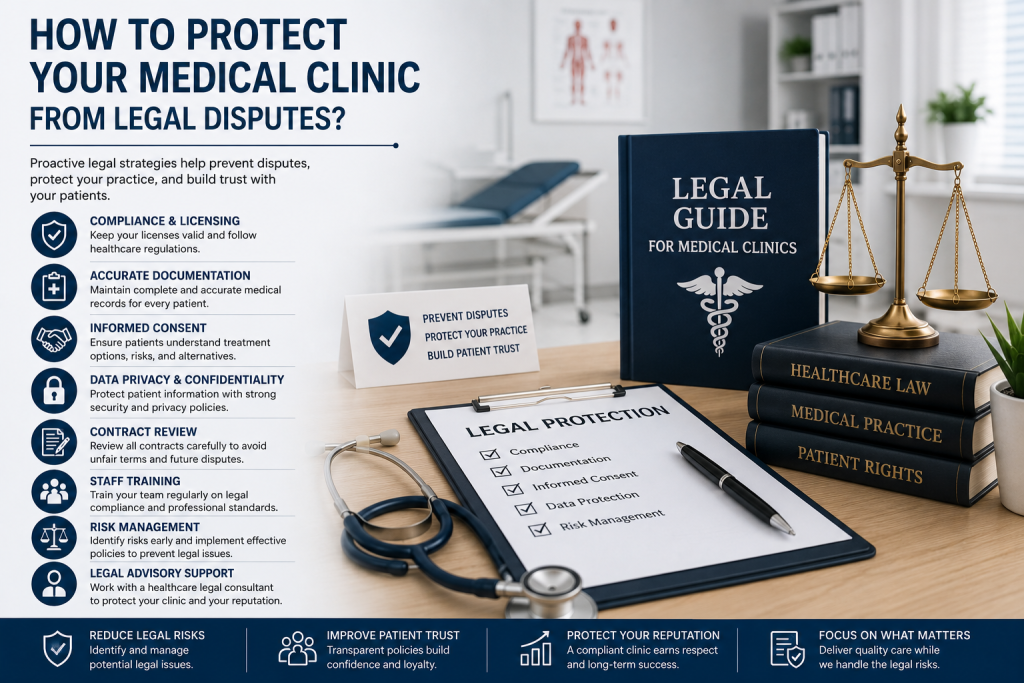
How to Protect Your Medical Clinic from Legal Disputes
Running a successful medical clinic requires more than providing excellent patient care. Healthcare providers must also navigate complex legal and regulatory obligations that affect every aspect of their practice. From patient documentation and employment matters to contracts and data protection, legal compliance plays a vital role in reducing risks and maintaining a reputable healthcare business.
Legal disputes can result in financial losses, reputational damage, regulatory penalties, and interruptions to daily operations. Fortunately, many of these disputes can be prevented through proactive legal planning, strong internal policies, and ongoing compliance efforts.
This guide explains the essential steps every private medical clinic should take to minimize legal risks and create a legally compliant healthcare environment.
Understand Your Legal Responsibilities
Every medical clinic operates within a legal framework established by healthcare authorities and government regulations. Clinic owners should understand the laws governing licensing, professional practice, patient rights, medical records, workplace safety, and data protection.
Keeping up with regulatory changes helps clinics remain compliant and avoid unnecessary legal complications.
Maintain Proper Licensing
Operating with valid licenses is one of the most important legal obligations for any healthcare facility.
Medical clinics should ensure that:
- Facility licenses remain valid.
- Healthcare professionals maintain active professional licenses.
- Medical equipment complies with regulatory standards.
- Required governmental approvals are renewed on time.
Failure to maintain proper licensing may lead to fines, suspension of services, or closure of the clinic.
Keep Accurate Medical Records
Medical records are often the strongest legal defense during disputes.
Every patient file should include:
- Medical history
- Examination findings
- Diagnosis
- Treatment plans
- Prescriptions
- Laboratory results
- Follow-up notes
- Informed consent documentation
Complete and accurate documentation demonstrates professional care and helps resolve disagreements more effectively.
Obtain Informed Consent
Patients should fully understand the risks, benefits, alternatives, and expected outcomes before undergoing treatment.
Well-documented informed consent helps:
- Protect patient rights
- Improve communication
- Reduce misunderstandings
- Strengthen legal protection
Consent forms should be written clearly and signed before procedures whenever required.
Develop Strong Internal Policies
Clear policies help employees follow consistent legal and professional standards.
Important policies include:
Patient Confidentiality
Protect all patient information through secure storage and controlled access.
Employee Conduct
Define professional expectations and workplace responsibilities.
Complaint Handling
Create a transparent process for receiving, investigating, and resolving patient complaints.
Incident Reporting
Encourage staff to report medical incidents promptly so corrective actions can be taken.
Review Contracts Carefully
Medical clinics frequently sign agreements with physicians, laboratories, suppliers, insurers, software providers, and maintenance companies.
Before signing any contract, review:
- 付款义务。
- Scope of services
- Liability provisions
- Confidentiality clauses
- Termination conditions
- Dispute resolution procedures
Professional legal review can identify hidden risks before agreements become legally binding.
Protect Patient Information
Healthcare organizations are responsible for protecting confidential patient data.
Best practices include:
- Secure electronic medical record systems
- Password-protected databases
- Limited employee access
- Regular cybersecurity updates
- Staff privacy training
Protecting sensitive information strengthens patient trust while reducing legal exposure.
Train Your Staff Regularly
Many legal disputes result from human error rather than intentional misconduct.
Regular staff training should cover:
- Healthcare regulations
- Patient communication
- Documentation standards
- Infection control
- 保密性。
- Emergency procedures
Well-trained employees are more likely to recognize legal risks before problems occur.
Implement Risk Management Programs
Risk management should become part of everyday clinic operations.
Effective strategies include:
- Internal compliance audits
- Policy reviews
- Equipment inspections
- Clinical quality assessments
- Patient safety initiatives
- Insurance coverage evaluations
Identifying risks early helps prevent expensive legal disputes.
Work with a Healthcare Legal Consultant
Legal professionals who specialize in healthcare understand the unique challenges facing medical clinics.
Their services often include:
- Regulatory compliance advice
- Licensing support
- 合約草擬與審核
- Employment law guidance
- Policy development
- 风险评估
- Dispute prevention
Obtaining legal advice before problems arise is usually far less expensive than defending legal claims later.
Build a Culture of Compliance
Legal protection is not achieved through documents alone. It requires an organizational culture that values ethics, accountability, transparency, and continuous improvement.
Clinic management should encourage open communication, regular compliance reviews, and continuous education for all healthcare professionals.
A strong compliance culture improves patient satisfaction while reducing operational and legal risks.
總結
Protecting a medical clinic from legal disputes requires careful planning, effective governance, accurate documentation, regulatory compliance, and proactive risk management. By maintaining proper licensing, protecting patient information, reviewing contracts carefully, training employees, and seeking professional legal guidance, healthcare providers can significantly reduce legal exposure.
Investing in legal compliance today creates a safer, more efficient, and more successful healthcare practice for the future.
常見問題
How can medical clinics prevent legal disputes?
Clinics can reduce legal risks by maintaining compliance, documenting patient care accurately, reviewing contracts, protecting confidential information, and providing regular staff training.
Why are medical records important during legal disputes?
Accurate medical records provide evidence of patient care, support clinical decisions, and help resolve claims efficiently.
Should every clinic have written internal policies?
Yes. Written policies ensure consistent procedures, improve compliance, and reduce operational risks.
Why is legal contract review important for healthcare providers?
Legal review identifies unfavorable terms, clarifies responsibilities, and minimizes financial and legal liabilities before contracts are signed.
When should a clinic consult a healthcare legal advisor?
Medical clinics should seek legal advice before opening a facility, signing major agreements, responding to regulatory investigations, or making significant operational changes.