
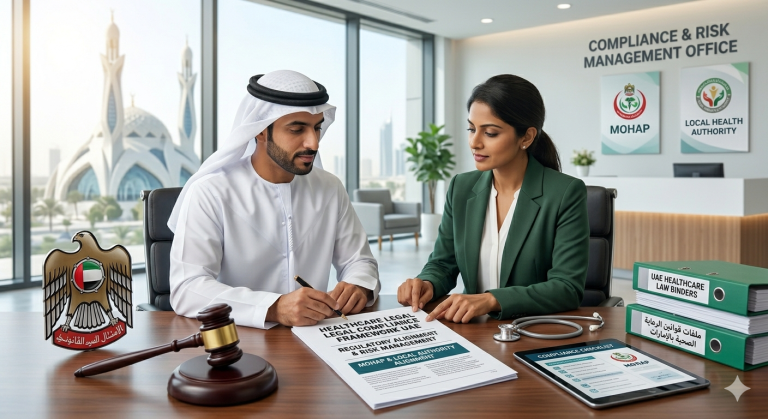
Legal Compliance in Healthcare Facilities in the UAE
Legal Compliance in Healthcare Facilities in the United Arab Emirates
The United Arab Emirates (UAE) has one of the most advanced and strictly regulated healthcare systems in the region. All medical clinics, hospitals, and healthcare providers must comply with detailed laws and standards issued by regulatory authorities such as the 迪拜卫生局, the 阿布扎比卫生部(DoH), and the 阿联酋卫生与预防部(MOHAP). These frameworks ensure patient safety, service quality, and ethical medical practice.
Failure to comply with healthcare regulations can lead to fines, license suspension, or closure of the medical facility.
Key Regulatory Authorities in the UAE Healthcare System
Healthcare compliance in the UAE is governed by multiple authorities depending on the emirate:
- 迪拜卫生局 – regulates healthcare facilities and professionals in Dubai
- Department of Health – Abu Dhabi (DoH) – oversees healthcare in Abu Dhabi
- 阿联酋卫生与预防部(MOHAP) – covers the northern emirates
These authorities establish licensing rules, clinical standards, inspection systems, and professional conduct regulations .
What is Healthcare Legal Compliance?
Healthcare legal compliance refers to the process of ensuring that all medical facilities operate according to applicable laws, regulations, and professional standards. This includes:
- Licensing of clinics and healthcare professionals
- Adherence to patient safety standards
- Compliance with data protection laws
- Proper documentation and reporting
- Ethical medical practice
The goal is to maintain a safe, transparent, and high-quality healthcare system.
Key Legal Requirements for Healthcare Facilities in the UAE
1. Facility Licensing and Renewal
Every clinic or hospital must obtain a valid license before operating. Licensing includes:
- Facility approval
- Professional licensing for doctors and nurses
- Regular renewal and inspections
Operating without a valid license is a serious legal violation.
2. Clinical Governance and Standards Compliance
Healthcare providers must follow strict clinical governance frameworks, including:
- Infection control standards
- Emergency care protocols
- Patient safety guidelines
- Quality assurance systems
Regulatory authorities regularly publish updated standards and inspection checklists to ensure compliance .
3. Patient Consent and Medical Documentation
Proper documentation is a key legal requirement:
- Informed consent before procedures
- Accurate patient medical records
- Treatment documentation and follow-ups
Failure to maintain documentation can lead to legal liability.
4. Data Protection and Patient Privacy
Healthcare facilities must protect sensitive patient information by:
- Securing electronic medical records (EMR)
- Restricting access to authorized staff only
- Following national data governance rules
Data breaches can result in severe penalties and reputational damage.
5. Staff Licensing and Credential Verification
All healthcare professionals must:
- Hold valid professional licenses
- Meet qualification requirements
- Maintain good standing certificates
- Pass regulatory exams when required
Hiring unlicensed staff is strictly prohibited.
6. Medical Advertising and Ethical Practice
Healthcare advertising is regulated to prevent misleading information. Clinics must:
- Follow approved advertising guidelines
- Avoid false medical claims
- Ensure transparency in services offered
Importance of Legal Compliance in Healthcare
Legal compliance is not only a regulatory requirement but also a business necessity. It helps:
- Improve patient trust and safety
- Reduce legal risks and penalties
- Strengthen institutional credibility
- Ensure smooth licensing and inspections
- Support long-term healthcare sustainability
Common Legal Risks in UAE Healthcare Facilities
Some of the most common compliance mistakes include:
- Operating with expired licenses
- Poor documentation practices
- Data privacy violations
- Unqualified staff hiring
- Non-compliance with inspection standards
These issues can result in fines, suspension, or closure of the facility.
總結
Legal compliance in UAE healthcare facilities is a critical foundation for safe and effective medical practice. By following licensing rules, maintaining patient safety standards, ensuring proper documentation, and adhering to data protection laws, healthcare providers can operate successfully while avoiding legal risks.
A strong compliance system not only protects the facility legally but also enhances patient trust and service quality.
常見問題
What happens if a clinic is not compliant in the UAE?
Non-compliance may lead to fines, license suspension, or permanent closure depending on the severity of the violation.
Who regulates healthcare facilities in the UAE?
Healthcare is regulated by DHA in Dubai, DoH in Abu Dhabi, and MOHAP in the northern emirates.
Is patient data protection legally required?
Yes, all healthcare facilities must ensure strict confidentiality and secure handling of patient data.
How often are healthcare facilities inspected?
Inspections are conducted regularly and may also occur randomly to ensure continuous compliance.